Bad fryer oil can leave food greasy, dull in color, and off in flavor. For restaurant operators, used cooking oil change frequency affects food cost, food quality, equipment upkeep, and kitchen safety in a commercial deep fryer.
For many restaurants, weekly replacement is a sound starting point within a broader fryer oil management plan. However, frying volume, menu items, and oil condition should guide the oil change schedule and protect cooking oil life.
Key Takeaways
- Start with an oil change schedule of weekly replacement or every 30 to 40 cooking hours.
- High-volume kitchens may need fresh oil every 2 to 5 days, depending on demand and menu items.
- Use daily filtration to remove debris, then check the oil’s color, clarity, and odor before service.
- Maintain temperature control and watch for smoke or foam, which can hurt food quality. Store cooled used cooking oil safely and arrange a dependable pickup schedule.
How Often Should I Change My Deep Fryer Oil?
For a commercial deep fryer, change used cooking oil once a week or after 30 to 40 cooking hours, whichever comes first. High-volume operations that fry breaded chicken, fish, or heavily seasoned foods may need a complete change every two to five days, sometimes daily.
The practical guidance in this restaurant fryer oil schedule is similar: fryer oil management depends on food type, daily demand, and oil condition. A lower-volume kitchen may get one to two weeks from its oil with disciplined daily filtration. A maintained oil filter system can extend oil use, while automated systems may support the process.
Match Oil Changes to Frying Volume
Use order counts as a starting point:
- High-volume kitchens with more than 100 frying orders daily often require fresh oil every two to three days.
- Moderate-volume kitchens handling 50 to 100 orders may allow four to five days.
- Low-volume operations may reach six to seven days, especially with consistent temperature control and careful monitoring of cooking oil life.
These ranges are not guarantees. When staff ask, “How often should I change my deep fryer oil?” the fryer itself gives the final answer.
Some Foods Wear Out Oil Faster
Breaded fish, chicken, and meat shed crumbs, moisture, and food particles into the vat. Strong seasonings also linger and can transfer flavor, accelerating oil degradation. Plain fries and vegetables are easier on oil with daily filtration and a maintained oil filter system. Staff should still inspect the oil when using automated systems.
Signs Your Commercial Fryer Oil Needs Replacement
Don’t wait for a calendar date if oil turns dark or cloudy. Food quality suffers when oil makes food greasy, causes weak browning, or leaves off flavors. Replace it when it develops a rancid smell, smokes at a normal frying temperature, or foams excessively, all signs of a lowered smoke point and oil degradation.
Oil-testing meters measure polar compounds, including total polar compounds (TPC), and help identify chemical breakdown. Where a 27% TPC limit applies, discard the oil once it exceeds that reading. For busy operations, commercial fryer maintenance guidance also supports condition-based replacement.
Filtering and Temperature Control Matter
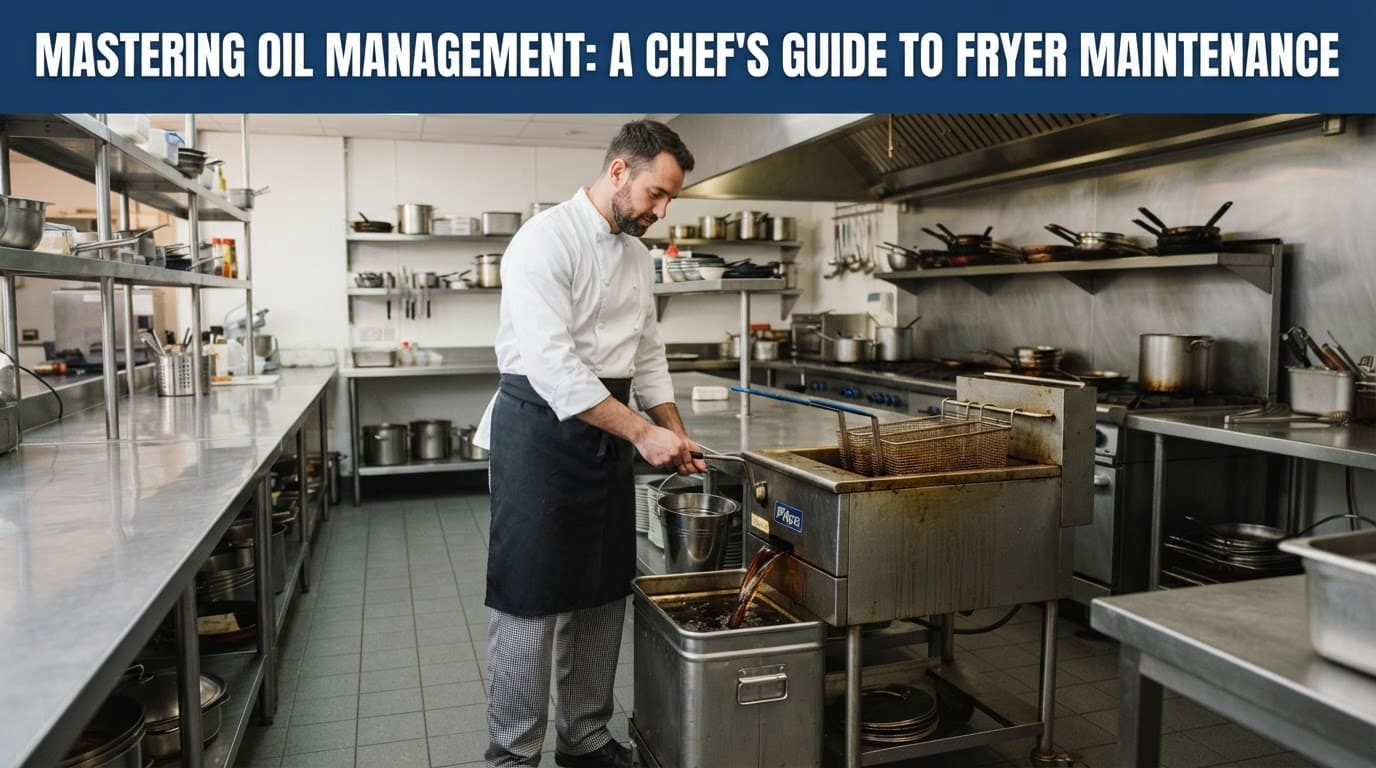
At closing, use daily filtration through the fryer’s oil filter system. Remove food particles and clean the fryer to support equipment cleanliness. Maintain temperature control by following the manufacturer’s recommended temperature. Overheating shortens oil life and can create safety risks, while poor grease management or topping off degraded oil only hides the problem.
Fresh oil cannot restore oil that already tastes bitter, smokes, or foams.
Dispose of Used Fryer Oil the Right Way
Cool used cooking oil before placing it in a secure, labeled container with enough storage capacity. This supports safe disposal and reduces the fire hazard. Never pour it into sinks, floor drains, or outdoor areas, where it can cause clogs, cleanup costs, and other safety risks.
Restaurant oil recycling services can provide scheduled pickup, indoor rolling bins, or secure outdoor steel containers; agree on a pickup schedule with a collection partner. Match the container’s storage capacity to that pickup schedule and the expected volume between collections. Post the pickup schedule for staff, and document disposal and recycling procedures that support compliance, grease management, and potential payment opportunities for recyclable cooking oil.
Frequently Asked Questions
Can I mix fresh oil with used cooking oil?
You can top off oil to maintain the proper level during service. However, fresh oil won’t correct degraded oil, so drain and replace the full batch when quality declines.
Should I filter fryer oil every day?
Yes. Daily filtration removes food particles that burn and speed oil breakdown. High-volume kitchens may need filtration after each shift.
Can used fryer oil go into a grease trap?
No. Grease traps aren’t storage containers for fryer oil. Store cooled used cooking oil separately for collection and recycling.
How should I plan a pickup schedule?
Work with a collection partner to set a pickup schedule based on oil volume and available container space. Adjust the pickup schedule as your needs change.
Keep the Fryer Schedule Flexible
A weekly change offers a useful baseline, but your oil change schedule should follow cooking hours, order volume, oil condition, and regular inspections. Check each fryer every shift and change oil before food quality declines.
Keep used cooking oil in a dependable collection program, with storage capacity matched to collection frequency. Confirm the pickup schedule with your collection partner, then review that pickup schedule after volume changes. Finish each shift with grease management and equipment cleanliness checks to reduce safety risks from drain damage, hot-oil handling, and improper disposal.