Used cooking oil piles up fast in restaurants and hotels. Left alone, it creates slip hazards, brings pests closer, and can damage the local sewer system like grease hardening in an artery.
That risk gets bigger in commercial kitchens and food service operations when staff are rushed and disposal becomes an afterthought. In New Jersey, used cooking oil should be recycled, not dumped. A simple system for used cooking oil recycling protects your kitchen, your team, and your business.
Key Takeaways
- Cool used cooking oil to a safe temperature before transfer, use gloves and tools like pumps or funnels, and filter out food particles to prevent spills, burns, and storage issues.
- Store oil in sealed, labeled, leak-proof containers away from drains and walkways; opt for indoor rolling bins or locked outdoor steel units and check them regularly.
- Follow New Jersey rules by treating used cooking oil as a Class D recyclable—partner with licensed haulers holding an A-901 transporter license and maintain grease trap records to avoid fines.
- Match container sizes and pickup schedules to your oil volume for a smooth routine that cuts chaos, protects plumbing, and may earn rebates from clean oil.
- Recycling supports biofuel production like biodiesel, reduces environmental harm, and turns a kitchen headache into cost savings and compliance wins.
Start with a safe in-house process for fryer oil before it leaves your kitchen
Good disposal starts long before pickup day. If staff handle hot oil carelessly or store it in the wrong place, small mistakes can turn into burns, spills, and expensive cleanup.
Let the oil cool, then move it with the right tools
First, let the oil cool to a safe temperature before anyone touches it. Hot oil can splash like lava, and one bad transfer can shut down part of the kitchen.
Staff should wear gloves, non-slip shoes, and a protective apron. Then use the right transfer method, such as a funnel, hand pump, or closed transfer system. Open pouring from a heavy fryer pot is where many spills begin.
If food crumbs or batter pieces are floating in the oil, use filtration to remove food particles first when possible. Cleaner oil stores better and improves quality for recyclers to process. It also keeps indoor bins from turning into a smelly mess.
Train staff on one standard oil management process and stick to it. When every cook does the same thing, the kitchen stays safer and faster.
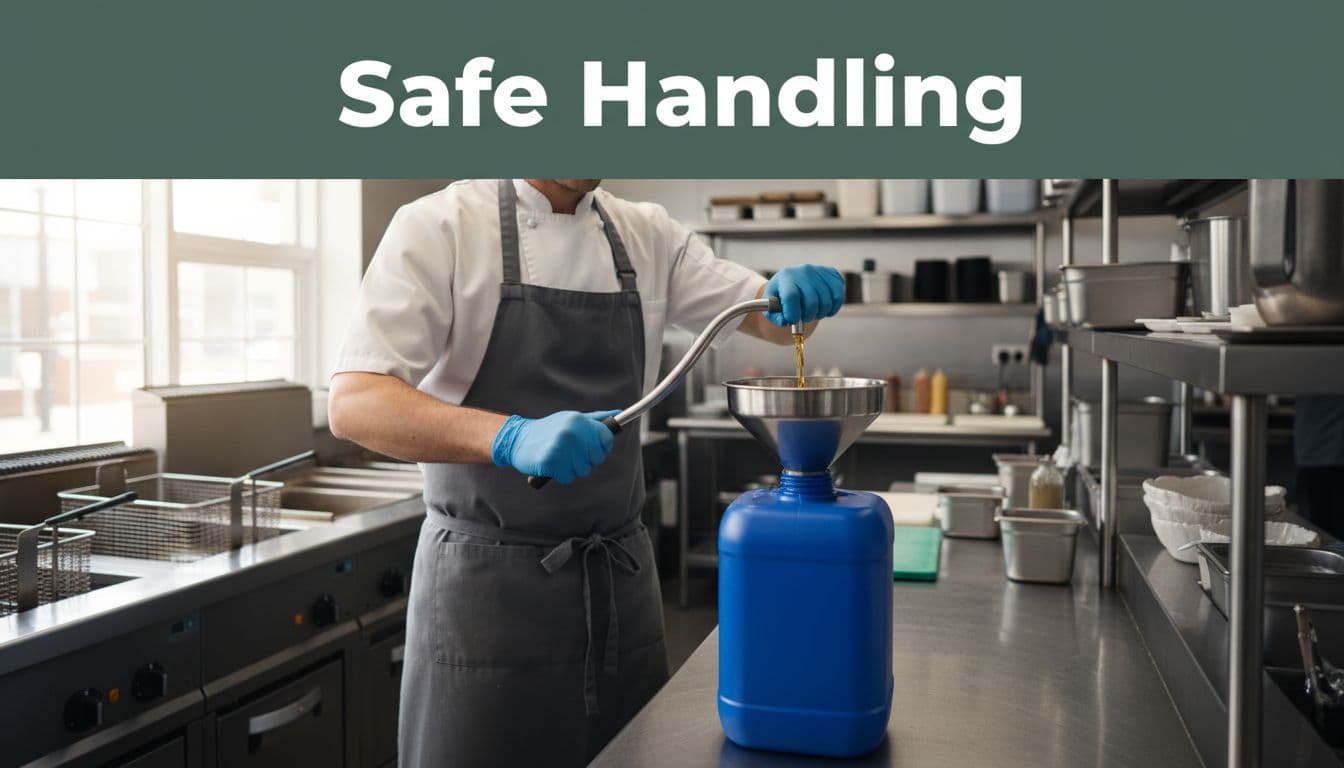
The safest oil transfer is the one that avoids open carrying, rushing, and guesswork.
Store used cooking oil in sealed, labeled containers
Once the oil is transferred, store it in leak-proof storage containers with tight lids. Label them clearly so nobody mistakes used oil for fresh cooking oil or other kitchen waste.
Keep containers away from floor drains, heat sources, and busy walkways. That cuts the chance of trips, splashes, and accidental dumping. Indoor rolling storage containers work well for many kitchens because staff can move them without lifting heavy loads. For modern kitchens, automated collection or closed-loop systems offer even safer indoor alternatives.
For outdoor storage, use locked steel containers on a flat surface. That helps with theft prevention, weather damage protection, and overflow avoidance. It also makes pickup easier for the recycler.
Check containers often for cracks, loose lids, and grease on the outside. A clean storage area tells inspectors, staff, and managers the same thing: this kitchen is under control.
Follow New Jersey rules and choose a licensed recycling partner
In New Jersey, used cooking oil from restaurants is treated as a Class D recyclable material. That means it belongs in a recycling program for proper disposal, not down the drain and not in the sewer.
Restaurants and hotels should also ensure grease trap cleaning is performed regularly and maintain records of clean-outs. Poor storage, spills, or missing records can cause health or environmental problems, and local action can follow.
### Know what can get your business in trouble
Some mistakes are common, but they still cost money:
- Pouring oil or grease down sinks, floor drains, or mop sinks
- Dumping oil near storm drains or outside behind the building
- Throwing large amounts of oil into the trash
- Using dented, cracked, or open containers
- Letting bins overflow while waiting for pickup
These problems can lead to sewer clogs, sanitary sewer overflows, strong odors, pest activity, and emergency plumbing bills. New Jersey also limits grease at trap outflows, and high levels can trigger fines. What looks like a shortcut often becomes the most expensive option.
What to look for in a pickup company
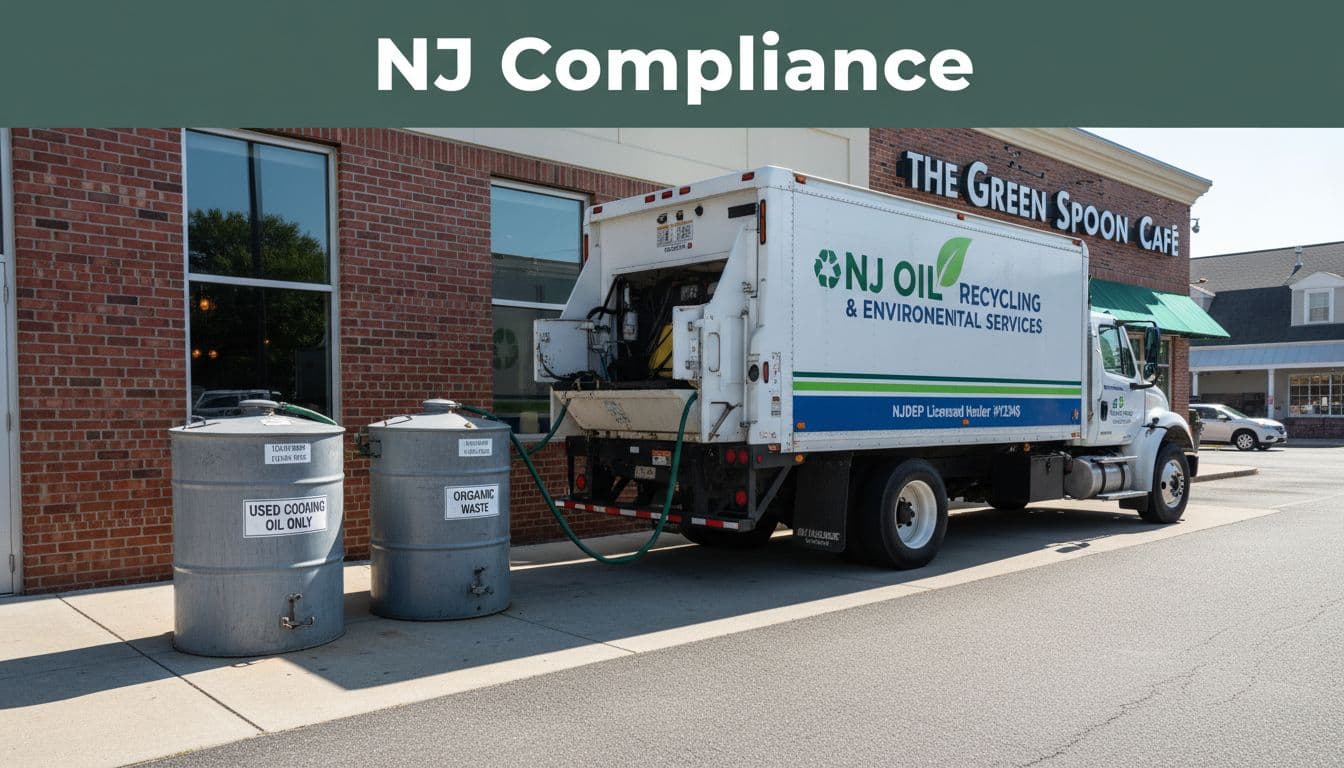
Use a rendering company that is properly licensed in New Jersey for full compliance. For transport, that means the hauler should have an A-901 solid waste transporter license and the proper markings on its trucks.
Ask practical questions before signing anything. How often will they pick up? Do they offer emergency service before a holiday weekend? Can they supply indoor bins or locked outdoor containers? Will they provide manifests or pickup records?
Busy restaurants and hotels need reliability more than promises, along with effective waste management. If your volume swings with catering, banquets, or seasonal traffic, the provider should adjust with you. Some recyclers also pay for clean oil or offer rebates, which can help offset service costs.
A good partner does more than remove waste. They help you stay organized, compliant, and ready for inspection.
Frequently Asked Questions
What are New Jersey’s rules for disposing of used cooking oil?
In New Jersey, used cooking oil from restaurants is classified as a Class D recyclable material and must be recycled through a licensed program, not dumped down drains, in trash, or outside. Partner with haulers holding an A-901 solid waste transporter license, and maintain records of grease trap cleanings to stay compliant and avoid fines from sewer clogs or overflows.
How do I safely handle and store used cooking oil in my kitchen?
Let the oil cool first, then transfer it using gloves, aprons, pumps, or funnels while filtering out particles for cleaner storage. Keep it in sealed, labeled, leak-proof containers away from floor drains, heat, and traffic areas—use rolling indoor bins or locked outdoor steel ones, and inspect regularly for issues.
What should I look for in a used cooking oil recycling partner?
Choose a New Jersey-licensed company with A-901 transporter approval, reliable pickup schedules that match your volume, and options like emergency service, supplied bins, and detailed manifests. They should handle volume swings from events or seasons and possibly offer rebates for clean oil to offset costs.
Why is recycling used cooking oil better than other disposal methods?
Dumping oil clogs sewers, attracts pests, causes slips, and leads to costly fines or repairs, while recycling prevents these hazards and keeps your kitchen compliant. It also turns waste into biodiesel or renewable fuels, cutting emissions and potentially earning your business rebates for cleaner operations.
How can I build an effective oil disposal routine?
Track your weekly oil volume to size containers and schedule pickups that avoid overflows, train staff on a standard process, and document everything for inspections. This routine reduces spills, eases management, protects grease traps, and makes collection predictable while highlighting sustainability benefits.
Build a cooking oil disposal routine that saves money and keeps the kitchen cleaner
Last-minute oil disposal creates chaos. Staff scramble, containers fill up, and spills become more likely. A regular recycling process keeps the kitchen calmer and cleaner with proper disposal practices.
When managers train staff, track volume, and document pickups, problems shrink fast. That routine also reduces drain abuse, protects grease traps, and makes collection day predictable.
### Match your container size and pickup schedule to your oil volume
Every kitchen produces oil at a different pace. A quick-service spot may fill containers far faster than a hotel kitchen with varied menus.
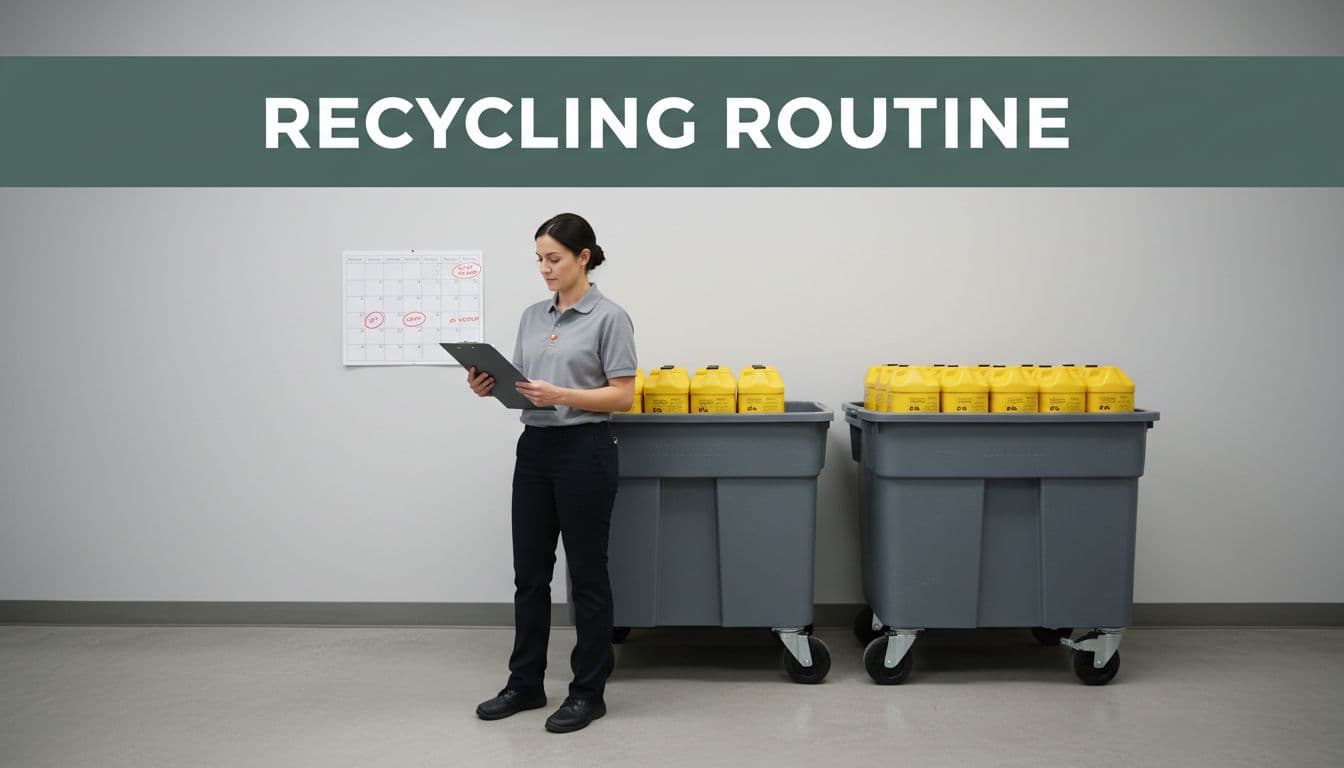
Check your weekly oil volume and adjust service around it. Small operations may need indoor rolling bins and less frequent pickups. High-volume kitchens often need larger outdoor tanks and tighter schedules, especially before holidays or event-heavy weekends.
The goal is simple, never let storage get close to overflow. When pickup timing fits your real output, the back-of-house stays cleaner and staff stop treating oil disposal like a fire drill.
Show the business value of recycling used restaurant and hotel cooking oil
This is not only about following rules. Recycling used restaurant and hotel cooking oil protects margins in plain, practical ways.
Regular pickup lowers the chance of clogged drains and expensive plumbing repair. Clean storage areas are easier to manage and easier to show during inspections. Some recyclers may also pay rebates for clean oil, which turns a messy byproduct into a small return.
There is also a bigger upside. Recycled oil can be processed into biodiesel, renewable diesel, or sustainable aviation fuel, supporting biofuel production and renewable energy while reducing greenhouse gas emissions. This environmental impact and sustainability benefits transform a potential liability into a positive contribution.
Cooling it, storing it well, documenting pickups, and working with a licensed recycler is the smart way to handle used oil. A strong waste management strategy keeps restaurants and hotels compliant, protects staff, and turns used cooking oil from a daily headache into something with financial and environmental upside.