Frying oil becomes a safety and sanitation problem when it leaves the vat. Heat, water, food scraps, leaks, and poor placement can affect worker safety, plumbing, sanitation, and food quality.
Storing used cooking oil before recycling requires a fixed routine. Total oil management includes cooling, filtering, containing, documenting, and scheduling collection. Restaurant technologies, such as temperature probes and digital closing checklists, can help staff verify each step.
Key Takeaways
- Let frying oil cool down to 100 F or lower before transferring it.
- Strain out food scraps, then keep water and chemicals away from the oil.
- Use a secure, labeled sealable container and check it at closing.
- Use restaurant technologies for fill-level alerts, temperature logs, and pickup reminders. Match container capacity to your pickup schedule.
Watch the used cooking oil safety video
Choose a Leak-Proof Container With a Tight-Fitting Lid
Use sound metal or heavy-duty plastic with a tight lid and a visible “Used Oil” label. A 55-gallon drum may suit a small operation. A busy restaurant may need a secured tank. Capacity should follow oil volume and pickup timing.
Keep Oil Separate From Other Waste
Keep used oil away from trash, recyclables, detergents, solvents, and grease-trap waste. Contamination complicates recycling. Closing staff should inspect lids, seams, and floors for leaks.
Safe Steps for Handling Frying Oil
Let the oil cool down to about 100 F or lower, preferably to room temperature. Skim solids, then strain the oil before transferring it slowly into a sealable container. For common vegetable oils such as canola oil, a coffee filter can catch fine particles when appropriate, but filtering doesn’t make degraded oil suitable for cooking again.
Whether staff should reuse frying oil depends on its color, odor, smoke behavior, and effect on food quality. Signs of oil degradation mean it should be recycled instead. Oil intended for recycling should remain clean and separate.
Commercial oil recycling guidance also warns against mixing oil with water or food debris. Never pour oil into a sink drain or garbage disposal, because it can cause clogs and damage infrastructure. Never add ice, cleaning chemicals, or wastewater. Heavy containers need two staff members, and filling should stop at roughly 80% capacity.
Restaurant technologies can support this routine with a digital temperature record, but they don’t replace staff inspection. Other restaurant technologies, such as an oil-quality or fill-level sensor, can identify changes or capacity limits. Together, these steps create total oil management that supports safer storage and cleaner recycling.
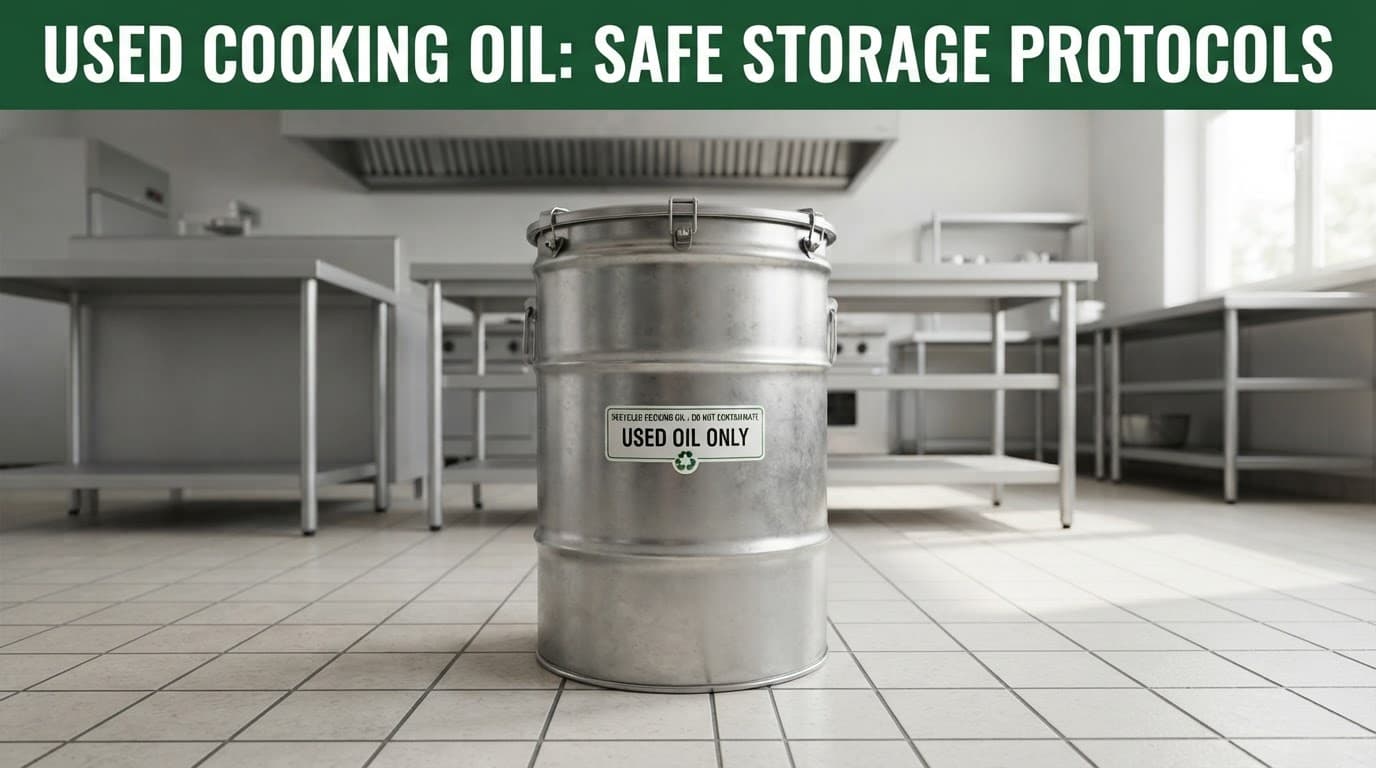
## Choose a Leak-Proof Container With a Tight-Fitting Lid
Use sound metal or heavy-duty plastic with a tight lid and a visible “Used Oil” label. A 55-gallon drum may suit a small operation. A busy restaurant may need a secured tank. Capacity should follow oil volume and pickup timing.
Keep Oil Separate From Other Waste
Keep used oil away from trash, recyclables, detergents, solvents, and grease-trap waste. Contamination complicates recycling. Closing staff should inspect lids, seams, and floors for leaks.
Choose a Leak-Proof Container With a Tight-Fitting Lid
Use sound metal or heavy-duty plastic with a tight lid and a visible “Used Oil” label. A 55-gallon drum may suit a small operation. A busy restaurant may need a secured tank. Capacity should follow oil volume and pickup timing.
Keep Oil Separate From Other Waste
Keep used oil away from trash, recyclables, detergents, solvents, and grease-trap waste. Contamination complicates recycling. Closing staff should inspect lids, seams, and floors for leaks.
Where to Store Used Cooking Oil Until Collection
When storing used cooking oil before recycling, keep containers on a flat, stable surface in a cool, dark place. The surrounding work area should stay dry, well lit, and secure. Protect the container from sunlight and heat, keeping it away from fryers, grills, flames, and busy routes. Aim for at least three feet from heat when site conditions allow.
Store used oil in a clearly marked location near the transfer route, and post the location for staff.
Indoor rolling bins need a clear transfer path. Outdoor steel containers should lock and remain accessible to collection trucks. Local disposal requirements vary, so fire, sanitation, and waste rules should guide the final setup. This supports compliant cooking oil disposal and recycling, not pouring oil into plumbing or a garbage disposal. Don’t solidify the oil inside a pumpable collection container when the collector requires liquid material.
Match Container Size and Pickup Frequency
An undersized bin invites overflow, while an oversized tank consumes work space. Fryer count, frying oil volume, staff movement, and truck access should determine capacity. Regular pickups prevent oil from sitting indefinitely and support total oil management.
Restaurant technologies can provide fill-level monitoring, while other restaurant technologies help coordinate pickup schedules and truck access. Choose a capacity and service frequency that match daily operations.
How Restaurant Oil Recycling Services Handle the Next Step
When a kitchen can no longer safely reuse frying oil, recycling is the next option. A professional collector supplies the right container, prevents spills, documents volume, and schedules reliable pickups. Restaurant technologies such as pump-assisted transfer and container-level monitoring make service safer and more efficient.
Clean vegetable oil, canola oil, fish oil, poultry fat, pork fat, and bacon grease can become recycled cooking oil feedstock. Depending on the processor, that feedstock may support products such as biodiesel. Used restaurant oil should not go to animal feed unless the processor and applicable regulations specifically approve it. Professional collection also provides safer cooking oil disposal than pouring oil down a drain, while supporting total oil management. Digital manifests and automated pickup reminders are additional restaurant technologies that help kitchens track service. A scheduled commercial pickup differs from taking oil to a recycling center.
Call NJ Oil Recyclers today to ask about container service, pickup scheduling, and the rebate program.
Frequently Asked Questions
Can hot frying oil go into a storage container?
No. Let it cool completely before transferring it. High heat can warp containers, cause burns, and endanger workers.
Can you reuse frying oil?
Sometimes, depending on its condition, odor, smoke point, and food quality. Oil that smells rancid, smokes early, or produces poor results should be prepared for recycling.
Can I use a glass jar for a small amount?
A glass jar works for a small, fully cooled household amount if the receiving program accepts it. Commercial kitchens should use an approved metal or heavy-duty plastic vessel. Strain fine particles with a coffee filter before storage, but never filter hot oil.
How long can oil remain on-site?
Keep it in a cool, dark place and follow a regular pickup schedule. Collection frequency should match container capacity, odor, leakage risk, and local rules.
Can restaurant technologies help manage pickup schedules?
Yes. Digital pickup reminders and level alerts can help staff schedule service before containers become overfilled.
Is fryer oil the same as grease-trap waste?
No. Fryer oil is commonly called yellow grease. Grease-trap material requires separate handling.
Final Thoughts
Cooling, filtering, labeling, and secure placement keep frying oil suitable for collection. Safe frying oil storage turns a messy byproduct into a managed material.
Restaurant technologies, including digital logs, fill alerts, and scheduled pickups, can reinforce staff checks without replacing them. Together, cooling, filtering, labeling, inspection, and collection create total oil management, reducing waste, protecting infrastructure, and keeping kitchen operations safer.