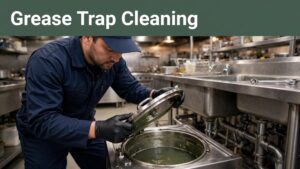
Most restaurants require grease trap cleaning every one to three months. Determining the right grease trap cleaning frequency is essential for your kitchen, as the exact timing depends on your specific grease production. High-volume establishments often require service every few weeks or even weekly to prevent overflows and plumbing damage.
Waiting for foul odors, a slow sink, or wastewater backup is expensive. Grease can block pipes, create sanitation problems, trigger local violations, and force a kitchen to pause service during the worst possible moment.
Consistent grease trap maintenance keeps fats, oils, and grease under control before they reach the drain line or the street sewer.
Key Takeaways
- Determine frequency by volume: Most restaurants require professional cleaning every one to three months, but high-volume kitchens may need weekly or bi-weekly service based on production levels.
- Adhere to the 25 Percent Rule: To prevent blockages and maintain system effectiveness, grease traps should be serviced before fats, oils, and grease account for more than 25 percent of the trap’s total capacity.
- Monitor for warning signs: Foul odors, slow-draining sinks, gurgling pipes, and visible grease buildup are urgent indicators that the trap is at capacity and requires immediate pumping.
- Maintain accurate records: Keep detailed logs of all pumping receipts and service dates to remain compliant with local health and environmental regulations, and to demonstrate proper maintenance during inspections.
The Right Grease Trap Cleaning Schedule Depends on Your Kitchen
There is no single cleaning schedule that works for every restaurant. A small cafe with limited food preparation creates far less grease than a high-volume commercial kitchen with fryers running all day.
As a starting point, most average restaurants should schedule grease trap pumping as a monthly cleaning, while smaller operations may only require quarterly cleaning. Restaurants that fry heavily, serve large crowds, or run long hours often need service every one to four weeks.
The key measurement is grease accumulation, not the calendar alone. Industry standards follow the 25 percent rule, which states that a trap should not hold more than 25 percent of its total capacity in fats, oils, and grease, or accumulated food solids. Once buildup reaches that level, the trap loses its ability to separate waste from wastewater effectively.
| Restaurant Type | Typical Starting Service Frequency |
|---|---|
| High-volume restaurant with fryers | Weekly to every few weeks |
| Full-service restaurant | Monthly to every three months |
| Small cafe or low-volume kitchen | Every three months or as local rules allow |
| Seasonal food business | Before peak season and based on actual buildup |
Local municipal regulations may set a stricter schedule. Many wastewater systems regulate commercial kitchens through a pretreatment program, which controls what businesses can discharge into the public sewer system.
What Changes How Often a Grease Trap Needs Service?
Determining the frequency of your grease trap service requires looking beyond the calendar. The rate at which grease accumulates is dictated by your kitchen’s unique operational demands, from the volume of food prepared to the specific types of ingredients used. Understanding these variables allows you to set a service schedule that prevents overflows while avoiding unnecessary costs.
Factors That Influence Grease Trap Cleaning Frequency
Daily customer traffic has a direct effect on how frequently you need service. More meals mean more dishes, more cookware, and more grease reaching the plumbing system.
Menu choices matter, too. Fried chicken, French fries, burgers, bacon, cheese-heavy dishes, and creamy sauces all create a larger grease load than coffee, pastries, or cold sandwiches. A restaurant that adds a fryer or expands its breakfast menu may need to shorten its pumping interval.
Trap size also changes the equation. Compact indoor grease traps can fill quickly in a busy kitchen. By contrast, a larger outdoor grease interceptor may hold more waste, though it still needs routine inspection and pumping.
Other factors include:
- The use of garbage disposals, which add food waste that settles in the trap.
- Dishwashing habits, including whether staff scrape plates before rinsing them.
- Long or poorly sloped drain lines that allow grease to cool and harden.
- A history of drainage blockages, foul odors, or wastewater backups.
- Recent increases in catering orders, delivery volume, or dining-room traffic.
A large grease interceptor does not give a restaurant permission to wait longer than necessary; it only provides more capacity. Regular checks show whether that capacity is being used up faster than expected due to heavy grease accumulation.
How to Tell When the Trap Needs Cleaning Soon
Routine service prevents most emergencies, but warning signs still deserve immediate attention. Do not wait for your next scheduled grease trap pumping if your commercial kitchen shows signs of a full grease trap system.
Common warning signs that your grease interceptor has reached capacity include:
- Foul odors near floor drains, dish sinks, or the grease trap cover.
- Slow drainage at sinks, floor drains, or dishwashing stations.
- Gurgling sounds from pipes after water drains.
- Standing water around drains or near the trap.
- Visible grease floating high inside the trap.
- Repeated drainage blockages after basic cleaning.
- Sewage or gray-water backups in food-prep areas.
A grease odor near the sink often means grease has already built up in the trap or drain line.
Call for professional service right away when wastewater backs up. Employees should keep customers and food away from the affected area until the maintenance issue is corrected and the area has been properly cleaned and sanitized.
Why Regular Grease Trap Cleaning Protects Your Restaurant
A clean grease trap is the best way to prevent plumbing issues, protect kitchen sanitation, and ensure smooth day-to-day operations. When grease moves beyond the trap, it cools inside pipes and clings to the line. Over time, that sticky layer catches food particles and creates a stubborn blockage that is difficult to clear.
Emergency plumbers can clear a drain, but emergency calls cost significantly more than scheduled maintenance. A backup can also interrupt dishwashing, food prep, and restroom use. During a lunch rush, even a short shutdown negatively affects sales and staff performance.
Regular pumping also helps keep fats, oils, and grease out of the municipal sewer system. When grease enters public infrastructure, it can combine with wipes, solids, and debris to cause dangerous sewer overflows. The U.S. Environmental Protection Agency’s wastewater resources explain why every commercial kitchen faces strict oversight regarding environmental compliance.
Cities, counties, and sewer authorities often require inspections, pumping records, approved waste haulers, and proper waste disposal methods. New Jersey restaurants should also monitor updates from the New Jersey Department of Environmental Protection to ensure they remain in line with state municipal regulations.
Health, Plumbing, and Compliance Problems Caused by Neglect
Grease does not stay soft forever. As it cools, it can harden into thick deposits inside the trap and connected drain pipes. Those deposits restrict water flow and can leave a persistent, foul odor in the kitchen.
Overflowing grease traps create unsanitary conditions that often lead to serious health code violations. Wastewater can spread across floors, reach food storage areas, and attract flies or rodents. A backup near food prep stations or clean dishware creates a safety hazard that demands immediate cleanup.
Improper waste disposal can also create compliance trouble. Pouring fryer oil into a sink, floor drain, dumpster, or storm drain can violate local rules and damage the property plumbing system.
Keep pumping receipts, waste manifests, inspection reports, and service records in one accessible file. Health inspectors, landlords, property managers, and wastewater authorities may request proof that the restaurant maintains its grease trap according to local standards.
Why Chemical Additives Are Not a Substitute for Pumping
Chemical treatments do not actually remove the grease, food solids, and sludge stored inside a trap. Some products merely break grease into smaller droplets, which may move farther down the pipe before cooling and collecting again.
Solvents and emulsifiers can also send more fats, oils, and grease into the sewer system. That process simply shifts the problem downstream rather than removing the waste. In some locations, certain additives may conflict with local wastewater regulations.
Physical pumping and professional cleaning service remove accumulated waste from the system. A professional cleaning service can empty the trap, remove settled solids, inspect the internal baffles, and clean connected lines when needed to ensure your kitchen remains fully functional.
How to Build a Grease Trap Maintenance Plan That Works
Start with regular inspections. Check the grease trap weekly if your restaurant produces a lot of fried or greasy food. Lower-volume kitchens can inspect less often, but they should still track buildup rather than rely on guesswork.
Measure the grease and solids layer during inspections. Schedule pumping before the trap reaches the 25% limit. If the trap fills faster than expected, shorten the service interval to keep your grease trap maintenance plan on track.
Document every visit in a maintenance log. A complete service record should include the date, the provider’s name, the amount removed when available, any drain-line concerns, and the next recommended service date.
Choose a licensed or experienced provider that removes the trap contents, cleans the equipment without relying on chemicals, transports waste properly, and provides a detailed maintenance log. Scheduled service is easier to manage than a last-minute call after an overflow.
Simple Kitchen Habits That Reduce Grease Buildup
Kitchen habits can slow grease accumulation, though they won’t eliminate the need for pumping. Robust staff training is especially important because one sink full of fryer oil can overwhelm a trap quickly. Educating your team ensures that food waste is captured properly rather than entering the waste disposal system.
Build these practices into closing and dishwashing routines:
- Scrape food scraps into the trash before washing dishes.
- Wipe greasy pans, grills, and cookware with paper towels first.
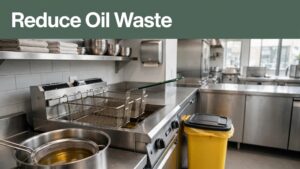
- Collect used fryer oil in a designated container for recycling.
- Use sink strainers to catch food solids.
- Keep mop water, sauces, and cooking oil out of floor drains.
- Teach new employees where grease, food waste, and oil belong.
Used cooking oil should go into a proper storage container, not a drain. Indoor and outdoor containers help restaurants store oil safely until a recycler collects it. Clean handling also keeps oily containers and trash areas from becoming a pest problem.
When to Schedule Professional Grease Trap Service
Move up your appointment when business spikes. Holiday catering, summer events, new delivery accounts, and menu changes in a commercial kitchen can increase grease production far beyond the normal level.
Schedule service immediately if you notice odors, slow drains, gurgling pipes, visible grease near the outlet, or a recent backup. Those signs often mean the grease interceptor or connected line is already under strain.
A reliable professional cleaning service can set up recurring pickups, supply appropriate storage containers, and handle used oil through approved recycling or disposal channels. That arrangement gives managers one less maintenance deadline to chase during a busy week.
Frequently Asked Questions
How can I tell if my grease trap is full without professional help?
Inspect the grease and solids layer using a measuring tool to see if it exceeds 25 percent of the trap’s capacity. Additionally, look for red flags like persistent foul odors near sinks, slow drainage, or gurgling sounds coming from the pipes after water is released.
Can I use chemical additives to reduce the need for professional pumping?
No, chemical cleaners are not a substitute for professional service. They often break grease into smaller particles that travel further down the line, potentially causing blockages in the sewer system and violating local environmental regulations.
Does the size of my grease trap determine how often it needs to be cleaned?
While larger outdoor interceptors hold more volume, they still require regular inspection and pumping to ensure they are functioning correctly. A larger trap allows for more capacity, but your service interval should always be based on actual buildup and the volume of grease produced by your kitchen.
What should I do if my grease trap overflows?
If you notice a sewage or gray-water backup, immediately stop all water use in the kitchen to prevent further flooding. Keep staff and customers away from the area, and contact a professional grease trap service provider right away to address the blockage and sanitize the affected space.
Keep Grease Trap Service on the Calendar
Most restaurants should determine their ideal grease trap cleaning frequency based on their specific operational needs, with many facilities requiring service every one to three months. While some kitchens may manage with a quarterly cleaning schedule, high-volume operations often require more frequent attention to handle the accumulation of fats, oils, and grease alongside food solids. The exact timing depends on your specific trap size, kitchen volume, and local regulatory requirements.
A critical best practice is following the 25 percent rule, which states that your trap should be serviced before the grease and solids layer exceeds one quarter of the total liquid depth. Do not ignore warning signs like foul odors or slow drains, as these indicate that your system is overdue for maintenance. By keeping clear records and reviewing your cleaning schedule regularly, you can avoid costly plumbing emergencies. To ensure your kitchen stays compliant and efficient, contact a dependable grease trap and cooking-oil recycling provider today to build a customized grease trap maintenance plan that keeps your operations running smoothly.