Profit Share When You Recycle Your Used Cooking Oil With NJ Oil Recyclers
Yes, restaurants and food trucks can earn a rebate for used cooking oil. The amount depends on oil quality, monthly volume, local demand, and the collection agreement.
For many operators, restaurants make extra money from used oil when clean yellow grease qualifies for a rebate through cooking oil recycling. Rebates are usually per-gallon credits or scheduled payments, not a major standalone income source.
Responsible collection also helps reduce the risk of sanitary sewer overflows and costly plumbing problems.
Key Takeaways
- Clean used fryer oil can earn a rebate through a qualified collector.
- New Jersey rebates advertised for clean oil often fall near $0.30 to $0.45 per gallon.
- Water, food scraps, chemicals, and grease-trap waste reduce oil value.
- Compare local collectors with national providers such as Restaurant Technologies. Review rates, fees, service reliability, records, licensing, and contract terms, since they vary by location.
Can Restaurants Make Extra Money From Used Oil?
Used cooking oil, often called yellow grease, has resale value because collectors process it into biodiesel, renewable diesel feedstock, and other industrial products. Biodiesel companies and other processors may buy this recovered material. A collector records the gallons removed, then pays by check, ACH, account credit, or a service offset under the agreed terms.
In New Jersey, Grease Connections has advertised clean-oil rebates around $0.30 to $0.45 per gallon. Eazy Grease has advertised typical ranges of $0.25 to $0.50 per gallon. These figures are date- and contract-sensitive and can change with market-indexed pricing, route costs, and contract terms.
A kitchen producing 200 clean gallons monthly at $0.35 per gallon could receive about $70 before applicable service charges. That is modest revenue, but it can offset waste-handling costs and support restaurant margins over a year.
What Determines the Value of Used Cooking Oil?
Monthly gallons matter because larger, predictable routes cost collectors less per gallon. Some providers offer stronger terms or free service as volume rises, although no universal minimum applies. One Hudson County collection company advertises different pricing tiers below 200 gallons, from 200 to 600 gallons, and above 600 gallons per month.
Oil quality matters just as much. Water, solids, additives, and degraded oil can affect free fatty acids and the value of the load. Oil mixed with chemicals, trash, or grease trap material may earn less or face rejection.
If kitchen staff use filter powder, disclose its use and any residue to the collector. Cleaner, purified fryer oil may provide more consistent feedstock, depending on the buyer’s specifications. Pickup location, container access, and storage capacity also affect the offer.
How Used Oil Collection Payments Usually Work
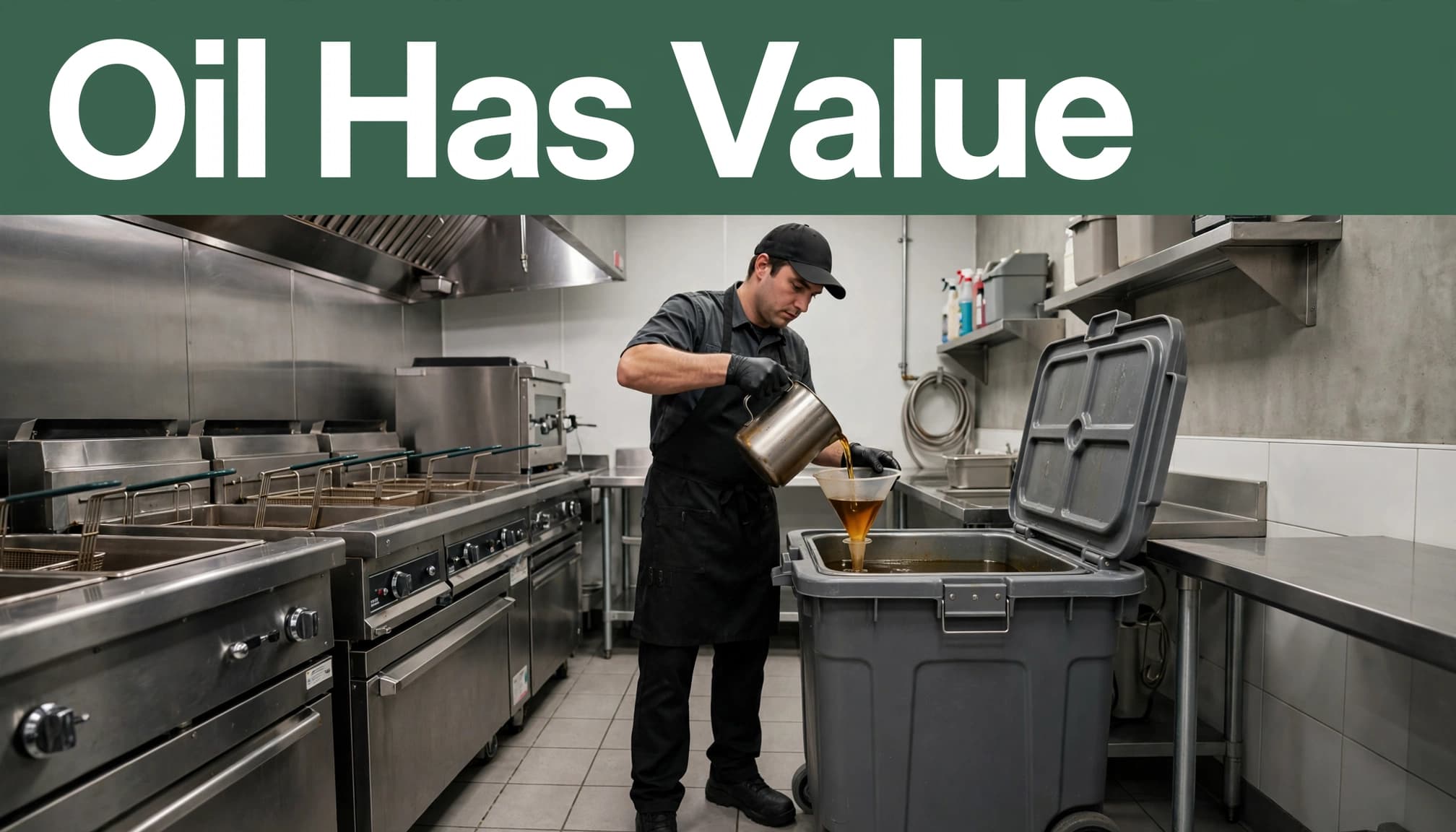
The collector supplies a leak-proof bin or tank, then kitchen staff transfer cooled fryer oil into it. A managed model, such as Restaurant Technologies, may combine equipment, collection, and recordkeeping. At pickup, the driver records the gallons removed or documents the container volume. The business receives a receipt, digital pickup record, or gallon log.
Payment timing varies. Some providers pay after each documented pickup, while others calculate rebates quarterly. Before signing, confirm the rate, measurement method, minimum volume, container ownership, cancellation terms, payment schedule, rebate contract, and emergency pickup charges. Also ask whether contamination or disposal fees can reduce the payment.
How to Earn More From Your Restaurant’s Used Oil
Higher returns usually come from protecting oil quality and using a collection plan that fits the kitchen’s output. Clean yellow grease is generally easier to collect and recover. Holding oil too long does not raise its value. Improper disposal can contribute to sanitary sewer overflows, odors, and theft.
Full-service restaurants often benefit from a secure storage container, such as a drum, rolling bin, or outdoor tank. Food trucks may need smaller containers, shared routes, or less frequent service that still keeps storage safe.
Keep the Oil Clean, Separate, and Easy to Collect
Filter out food solids when your frying process allows it, and use filter powder only when frying-equipment or collector instructions permit it. Prevent excess processing material from entering the collection stream. Keep water, mop chemicals, cleaning products, and general trash out of the container. Never combine fryer oil with grease-trap waste.
Staff should let oil cool before transfer and follow a clear spill-response procedure. Indoor rolling bins work well where access is tight, while locking outdoor steel bins can reduce theft and overflow. The right container also limits odors, slip hazards, and cleanup labor.
Choose Pickup Frequency and Containers That Fit Your Volume
Set a pickup schedule that matches production volume. A busy restaurant may need weekly service or more frequent pickups during peak periods. Smaller kitchens and food trucks may use biweekly or monthly pickups if storage remains secure and within capacity.
Container options can range from 55-gallon drums to 300-gallon units, depending on the provider and site. Some managed programs, such as Restaurant Technologies, combine storage equipment with scheduled collection. Compare container costs, pickup fees, locked storage, overflow response, service area, and documented gallon totals. A lower rebate can still be the better deal when service prevents costly spills.
Compare Rebates, Costs, and Compliance Before Choosing a Collector
Ask two or three collectors for written quotes from providers such as Restaurant Technologies, where available. Then compare the full monthly value and quote factors, including rebate income, avoided disposal costs, container service, staff labor, cleanup exposure, pickup fees, and oil quality.
A high advertised rate loses value when a provider misses pickups or adds disposal fees that weren’t clear in the quote. Rebate rates can also change with market-indexed pricing. For New Jersey businesses, state guidance treats used cooking oil as a Class D recyclable material. Confirm the collector’s A-901 transporter license, insurance, records, final destination, and environmental compliance practices. Ask whether the oil goes to a processor such as Darling Ingredients or to biodiesel companies, without assuming a specific local rate.
New Jersey Rules Restaurant Owners Should Know
Use approved, leak-proof storage and work with a properly licensed transporter. Keep pickup receipts or manifests as required, and never pour oil into sinks, storm drains, or sewers, which can contribute to sanitary sewer overflows.
Tell the collector about filter powder, grease trap material, or other processing aids and residues before pickup. New Jersey rules address storage, collection centers, rejected tainted oil, and transporter requirements. Oil mixed with hazardous materials can create major compliance problems. Under NJDEP rules, used oil containing more than 1,000 ppm total halogens is presumed hazardous waste unless that presumption is rebutted. Confirm current requirements with NJDEP or qualified counsel.
Frequently Asked Questions
Can a Small Food Truck Get Paid for Used Oil?
Small food trucks may qualify for a rebate, but minimum volume and service costs can limit payment. Ask about shared routes, compact containers, pickup fees, and the final rebate after charges.
What Happens If Used Oil Is Too Dirty?
Heavily contaminated oil may earn less, be rejected, or trigger a disposal charge. Ask each collector about contamination standards and keep other waste streams separate.
How Much Can a Restaurant Make From Used Fryer Oil?
There is no universal payout. At an advertised $0.30 to $0.45 per gallon, 100 gallons of clean yellow grease could produce $30 to $45, subject to market conditions, contract terms, and fees.
Is Free Used Oil Pickup Better Than a Cash Rebate?
The best option is the one with the stronger total monthly value. Compare service terms from providers such as Restaurant Technologies, since free pickup terms can vary. Free pickup with dependable containers may beat a higher rate that includes fuel, emergency, or disposal charges.
Can Restaurants Pour Used Oil Down the Drain?
No. Oil and grease can block private plumbing, contribute to sanitary sewer overflows, violate local rules, and create cleanup or enforcement costs. Use a designated collection container and a licensed recycling or disposal service.
Put Used Oil to Work for Your Business
Clean, consistently separated yellow grease and stable oil quality can support more dependable rebates. Compare collectors on service reliability, container security, and compliance, not just price. A managed-service option such as Restaurant Technologies may simplify collection, while recovered oil may eventually support products such as renewable diesel.
Request a written quote listing the rebate, measurement method, pickup schedule, container service, fees, payment timing, and compliance documentation. A reliable program can reduce disposal risks, prevent sanitary sewer overflows, and turn used oil into a modest return for your business.