The process for recycling used cooking oil starts with safe restaurant storage, followed by collection, cleaning, and processing into a usable feedstock. That feedstock may become biodiesel, renewable diesel, sustainable aviation fuel, or another product, depending on the processor and buyer.
Your kitchen’s job is to keep the oil separate and contained, never pour it down a drain, and have it ready for pickup. The process starts before the collection truck arrives, with how your team handles each fryer change.
Key Takeaways
- Let cooking oil cool according to equipment and workplace procedures before transferring it to a designated collection container.
- Keep the container closed, leak-proof, secure, and protected from rain, vehicle damage, and accidental spills near drains.
- Collectors transport oil for screening, water removal, drying, and quality checks, although each facility’s methods and acceptance standards differ.
- Recycled oil can supply several fuel markets, so every collected load doesn’t necessarily become a single type of renewable fuel.
- A dependable collection agreement addresses pickup timing, container maintenance, contamination limits, service records, and any payments or charges.
Recycling Used Fryer Oil: What Happens at Each Step
The basic sequence of oil recycling is straightforward: store the spent oil, collect it, remove contaminants, and prepare it for downstream use. Collection equipment and processing methods vary between operations.
Restaurants collect and store cooled oil
As cooking oil breaks down, its smoke point can fall. Staff assess whether it remains fit for reuse and schedule a change.
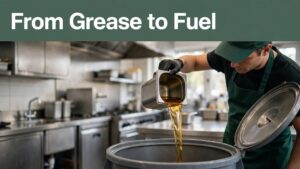
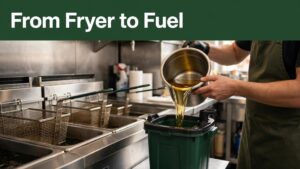
Staff first let the spent oil cool according to the fryer manufacturer’s procedures and the restaurant’s safety practices. There’s no single cooling time or transfer temperature for every fryer and collection system.
Once it’s safe to handle, staff put the oil in a designated, leak-proof container. They should use the transfer equipment and protective gear required for their setup, not improvise with unsuitable buckets.
Keep water, food waste, cleaning chemicals, and other liquids out. Fryer oil is often called “yellow grease” in the recycling trade, and it needs a separate collection stream from grease-trap waste and other FOG.
Oil recyclers pick up the oil and remove contaminants
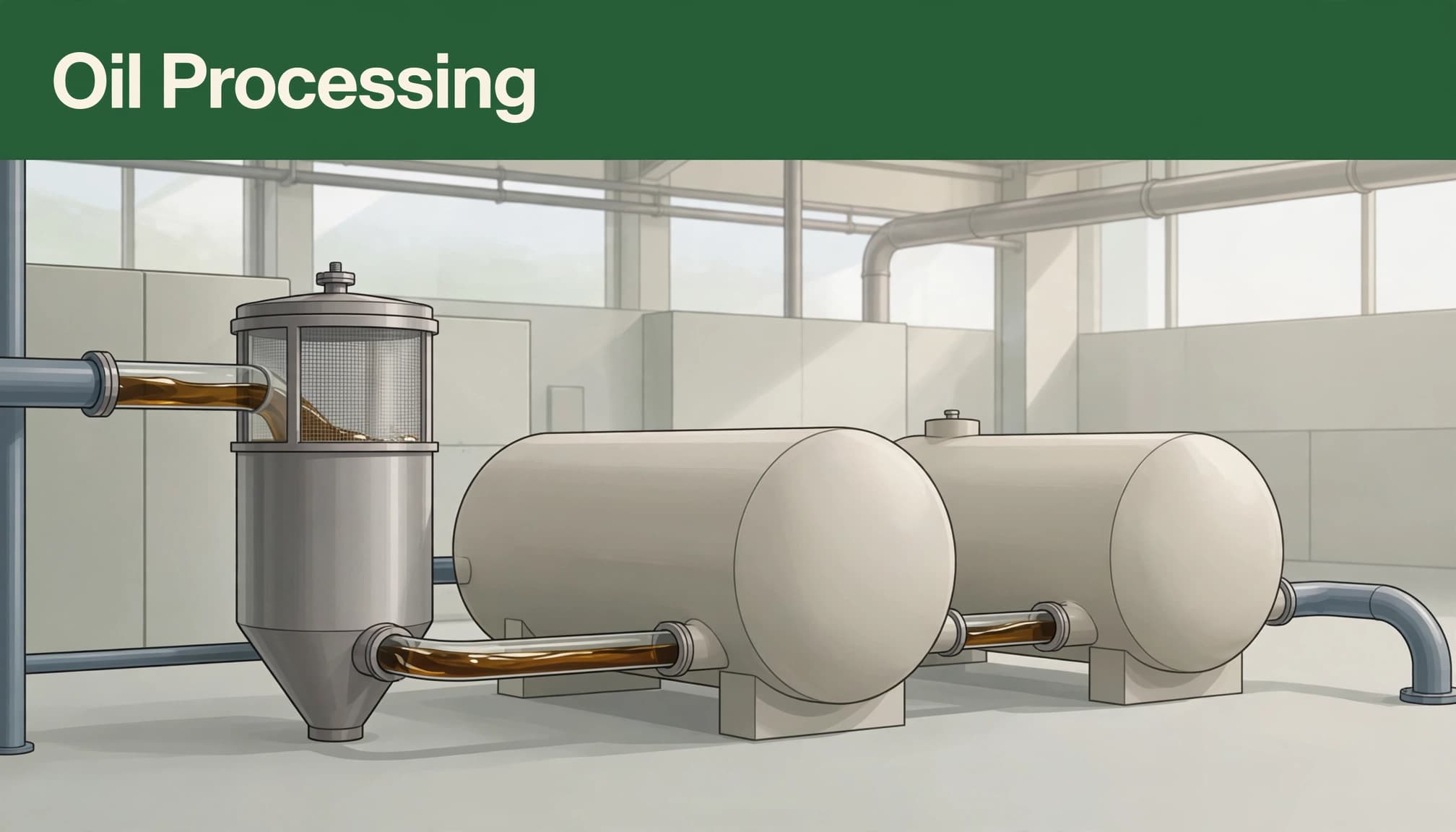
During scheduled pickup, oil recyclers may pump spent oil from a tank into a truck or remove a collection bin. They then transport it to a processing facility.
Common pretreatment steps include screening out food particles, separating water, and drying the oil to remove remaining moisture. The New York State Pollution Prevention Institute’s waste cooking oil processing guide describes these operations.
Processors also assess quality, including moisture, impurities, and free fatty acids. Equipment, treatment sequences, and acceptable limits depend on the facility and its buyers.
How to Store Used Cooking Oil Safely Before Pickup
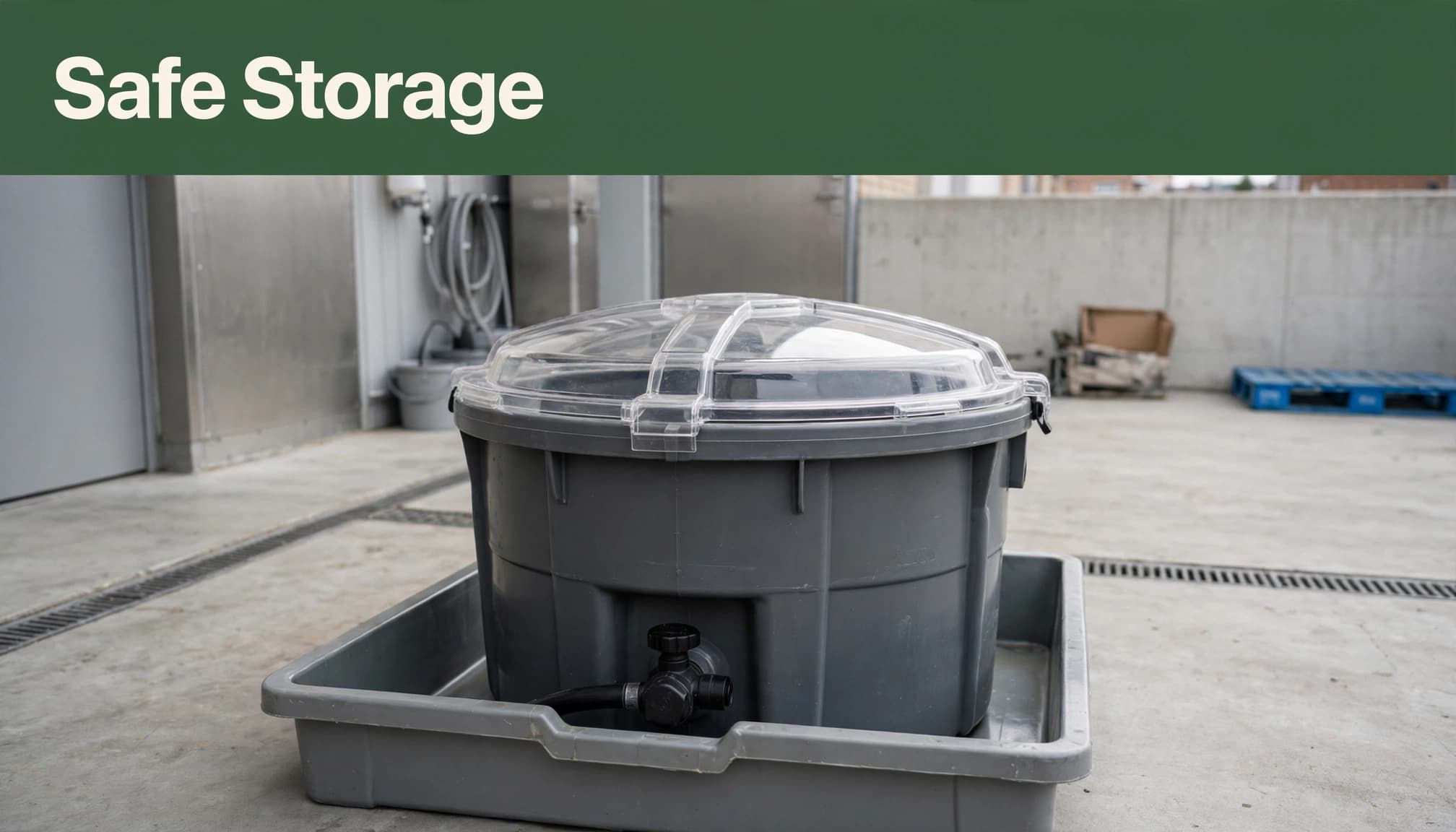
A collection container needs to withstand daily kitchen use and stay secure between pickups. Use a sturdy, closed container designed for used cooking oil, and follow the collector’s filling and handling instructions.
Keep water, scraps, and other waste out
Rainwater and wash water add contamination that processors must remove. Food scraps add solids, while cleaners and unrelated waste can make a load unsuitable for its intended use. Keeping these contaminants out helps preserve the oil’s quality as yellow grease.
Straining requirements depend on the collection setup. Some systems call for removing large scraps before transfer; others rely on facility screening. Staff don’t need to improvise a filtering process.
Keep grease-trap pumpings separate, too. Connecticut’s grease interceptor guidance describes equipment that separates fats, oils, and grease (FOG) from wastewater. This is a different waste stream from oil stored in dedicated containers.
Protect the container and transfer area
Position the container so staff and collectors can access it without exposing it to vehicle impacts. Keep lids closed and restrict unauthorized access.
Protect outdoor storage from rain, and address leaks promptly. A suitable containment tray or other secondary containment can help keep a release from spreading.
Research on waste cooking oil storage identifies collection and storage conditions as factors in feedstock quality. Good storage protects the oil’s usefulness and the work area.
A collection container shouldn’t become a mixed-waste bin. Adding water or cleaners creates a problem that routine food-particle screening can’t necessarily solve.
Where Recycled Oil Goes After Processing
Cleaning prepares used oil for another manufacturing process. Purified yellow grease can serve as a feedstock for fuel processors, but it isn’t finished fuel, and collection routes may supply different markets over time.
Biodiesel requires chemical conversion
Producers convert oils and fats through transesterification, a chemical process. Oils with low free fatty acids generally need less pretreatment before conversion. Producers then separate and refine the resulting fuel, which must meet the ASTM D6751 quality standard.
Filtered cooking oil and finished fuel aren’t interchangeable. Restaurants should use an established collection service rather than treat filtering as fuel production.
The following small-scale demonstration illustrates the conversion chemistry. It’s background information, not a restaurant operating procedure.
Renewable diesel and aviation fuel follow different pathways
Renewable diesel is chemically different from biodiesel. Producers process suitable feedstocks into hydrocarbon fuel rather than the fatty acid esters found in biodiesel.
Used cooking oil can also supply sustainable aviation fuel production through suitable refining pathways. Other buyers may use recovered oil for fuel or industrial reuse, including lubricants and bio-based products.
The actual destination depends on the collector’s arrangements, the oil’s quality, and the receiving manufacturer’s requirements. Recycling used oil doesn’t guarantee one particular end product. A recycling claim should match the destination the collection service can document.
How Restaurants Can Set Up Reliable Oil Collection
A dependable oil recycling routine starts with a clear agreement about the container, pickup schedule, and accepted materials. Storage capacity should match the kitchen’s oil output, including busy periods when a routine pickup schedule may leave too little room.
We provide used cooking oil collection and recycling for foodservice businesses in Central New Jersey and throughout New Jersey.
Define container responsibilities and pickup timing
Ask whether the oil recyclers supply the container, who maintains it, and how they handle damage or leaks. The agreement should also cover access, placement, and filling restrictions.
Pickup timing should reflect actual oil production and available storage. A high-volume frying operation may need a different schedule than a kitchen that changes oil less often.
Set a clear procedure for requesting an extra pickup before the container reaches its filling limit. Include the collector’s contamination instructions in staff training so every shift follows the same process.
A designated manager can handle service communication and keep instructions consistent when employees change.
Put documentation and costs in writing
The service agreement should identify the records provided after collection, such as receipts, weight tickets, or service reports. Keep these with the restaurant’s waste-management records so pickup history stays accessible.
Licensing and documentation requirements vary by state and municipality. The collection agreement should address applicable local requirements rather than rely on a generic national checklist.
Payment isn’t automatic. Written terms should cover service fees, container costs, minimum volumes, payment arrangements, and contamination deductions.
Also establish what happens when oil falls outside acceptance requirements. A clear rejection procedure prevents contaminated material from remaining in storage without a disposal plan.
Frequently Asked Questions
Can used cooking oil go down the sink or floor drain?
No. Keep it in a dedicated collection container, never a sink, floor drain, or storm drain. EPA’s FOG management guidance addresses grease-related wastewater problems. Drain disposal can contribute to sewer blockages or stormwater pollution.
Does restaurant staff need to filter used cooking oil before pickup?
Not always. Processing facilities commonly screen and filter collected oil, so restaurant-side filtering depends on the collection equipment and service instructions. Staff should remove large scraps only when the approved handling process calls for it.
What if water or food scraps get into the oil?
Processors can remove some solids and moisture, but contamination can still affect the oil. Excess contamination may lower quality, reduce value, or affect acceptance. Keep the oil separate, and report accidental contamination before the next pickup.
Does all collected used cooking oil become biodiesel?
No. Other possible destinations include renewable diesel and advanced biofuels. The collector’s buyers and the processed oil’s specifications determine the destination, so don’t assume every pickup goes to the same end use.
Does a restaurant get paid for its used cooking oil?
Payment isn’t guaranteed, and there isn’t one standard arrangement for every restaurant. Terms can include payments, collection charges, container costs, minimum volumes, and contamination deductions. Compare the complete agreement rather than judging it only by a quoted oil price.
Do used oil collection rules vary by state?
Yes. Licensing, handling, transportation, and recordkeeping requirements can differ by state and municipality. Restaurants need to follow the requirements that apply to their location. A rule or document used elsewhere doesn’t automatically satisfy New Jersey or local obligations.
Make Safe Storage the Start of Reliable Oil Recycling
Successful oil recycling starts with consistent kitchen handling of fryer oil. Cool it according to workplace procedures, store it in a secure collection container, and keep water and other waste out.
Regular pickup moves the oil to processing, where its quality and buyer requirements determine what happens next. Clear service terms help keep collection dependable.
Ask us about dependable used cooking oil pickup for your restaurant, with a container and collection schedule suited to your operation.