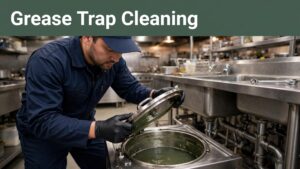
Most commercial kitchens schedule grease trap cleaning every 1 to 3 months, but buildup and local rules determine timing. A clean trap helps prevent clogs, odors, and sewer problems.
For restaurants in New Jersey and Pennsylvania, start with your kitchen’s workload and the requirements governing its wastewater.
Key Takeaways
- Treat 1 to 3 months as a starting point for professional grease trap cleaning, not a legal guarantee.
- Measure accumulated FOG and solids before extending service intervals.
- Match ongoing grease trap cleaning maintenance to kitchen activity and device size.
- Keep disposal records and follow local wastewater requirements.
How often should a grease trap be cleaned?
For commercial kitchens, grease trap cleaning every 1 to 3 months is a common industry recommendation, not a universal legal rule. Smaller grease traps or heavily used systems may need service sooner as FOG and solids accumulate.
Some local programs use the 25% rule: floating grease and settled solids together occupy about one-quarter of the device’s operating liquid depth or capacity. Local wording determines the measurement method. This rule isn’t a federal EPA cleaning mandate.
What changes your grease trap cleaning schedule?
Meal volume, menu, sink and dishwasher use, trap size, and measured buildup all affect timing. Busy kitchens serving fried or high-fat foods can accumulate FOG, or fats, oils, and grease, faster. Check the baffles when assessing how well the device works.
A larger grease interceptor doesn’t automatically justify longer intervals because local rules may set a maximum service interval. For NJ and PA restaurants, local sewer authority requirements, permit conditions, and plumbing rules can affect the schedule.
Set a schedule that prevents backups and missed rules
Inspect the device regularly, check baffles, and record FOG levels. Keep grease trap cleaning dates, pumping reports, and waste manifests together to track accumulation and document disposal.
Shorten the interval when buildup rises before the next visit. New Jersey and Pennsylvania requirements can vary by municipality, so follow the applicable sewer rules and permit conditions.
Contact a qualified service provider to assess the device and recommend professional cleaning and a grease trap maintenance plan.
Frequently Asked Questions
Is the 25% rule a federal EPA requirement?
No. The federal pretreatment regulations don’t impose a universal 25% cleaning trigger. Some local programs adopt a similar threshold, and their exact wording controls.
Can restaurant staff clean a grease trap themselves?
Trained staff may clean small devices where local rules allow. Full pumping and disposal often require a qualified provider; proper waste handling and records remain necessary.
What are signs the trap needs service sooner?
Slow drains, odors, visible grease buildup, or a backup signal trouble. Arrange service instead of waiting for the routine date.
How much does cleaning cost for a commercial kitchen?
Pricing depends on device size, location, travel and access needs, and whether vacuum pumping is required. Request a quote based on the specific device and service needs.
Base Your Schedule on Buildup
Regular grease trap cleaning prevents buildup and local requirements from catching your kitchen off guard, rather than relying on one nationwide calendar.
Review your last service record, factor in your kitchen’s daily FOG volume, and apply the governing rules. Book a professional grease trap cleaning inspection if your current schedule is uncertain.