One bad habit with fryer oil can turn into clogged pipes, bad smells, or a compliance problem. For those in commercial kitchen operations like restaurants and hotels in New Jersey, maintaining environmental stewardship is a priority, and used cooking oil needs more than a quick dump behind the building or down a drain. While residential needs might involve turkey fryer oil, professional settings such as restaurants and food truck oil disposal require a more rigorous approach.
If you’ve searched for help with disposing used restaurant cooking oil, the safest answer for proper fryer oil disposal and cooking oil management is also the simplest: cool it, store it well, and hand it to a licensed recycler. Here’s how to do that without creating a mess.
Key Takeaways
- Used cooking oil is a Class D recyclable material in New Jersey—never pour it down sinks, drains, grease traps, storm drains, or dumpsters to avoid clogs, odors, pests, and compliance issues.
- Cool the oil first, then store it in leak-proof containers like sealed drums or locking bins, kept away from drains, traffic, and theft risks to protect your kitchen and preserve oil value.
- Partner with a licensed NJ recycler holding an A-901 solid waste transporter license for scheduled pickups, grease services, and manifests to ensure compliance and support biodiesel recycling.
- Maintain grease traps with outflow under 70 mg/L, keep service records, and schedule regular collections to prevent fatbergs, inspections flags, and permit suspensions.
- Proper handling keeps operations clean, compliant, sustainable, and mess-free while qualifying for better recycler returns.
Start with the rule that matters most
Used cooking oil is treated as a Class D recyclable material in New Jersey, distinct from household hazardous waste which is typically taken to local county recycling centers. Proper cooking oil management means you should not pour it into sinks, floor drains, grease traps, storm drains, or dumpsters.
Why does that matter? Oil behaves like cholesterol in an artery. It sticks, builds up, and slows everything down. Over time, that leads to backups, odors, pests, and expensive plumbing work. Effective kitchen grease management and grease trap cleaning are essential to prevent sewer system blockages.
Commercial kitchens also need working grease traps or interceptors. Those systems must be maintained, and outflow fats oils and grease must stay under 70 mg/L. Consistent grease trap maintenance is key to fatberg prevention. If records are missing or spills happen, inspectors can flag the site and, in some cases, suspend permits.
Pouring fryer oil down a drain doesn’t make it disappear. It only moves the problem to your pipes, trap, or sewer line.
Store used cooking oil safely before used cooking oil collection
The first step is patience. Let hot waste frying oil cool in the fryer or in a safe transfer container before moving it. Hot oil and rushed handling are a bad mix.
Next, transfer the cooled oil into leak-proof oil recycling containers. Many restaurants use sealed drums, indoor rolling bins, or outdoor locking steel oil recycling containers supplied by a recycler. For outdoor oil storage bins, add anti-theft equipment to prevent oil theft. Keep them away from drains and traffic paths, and don’t let oil recycling containers overflow.
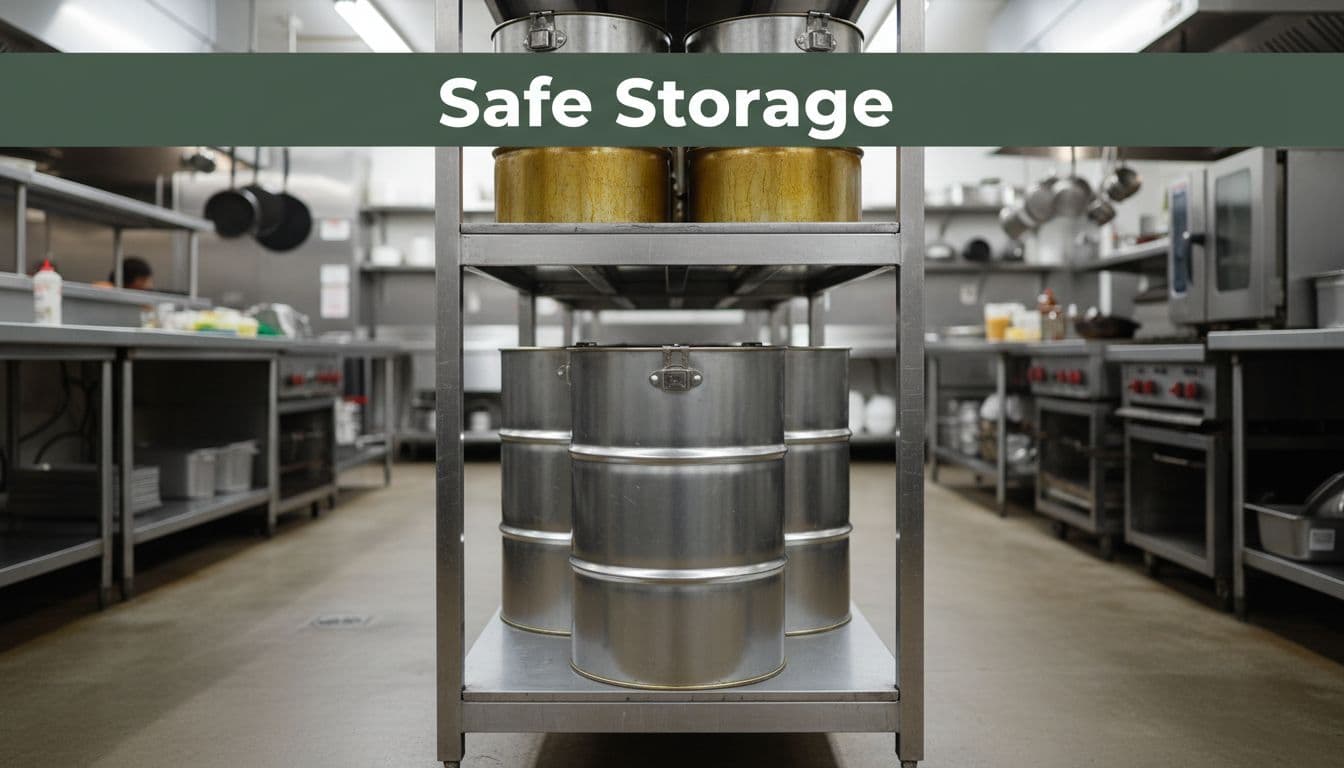
Good storage protects more than your floor. It also protects the oil’s value. Cleaner, uncontaminated waste cooking oil is easier to recycle and may qualify for better return rates from a pickup service. For the full journey from fryer to fuel, see what restaurants do with old cooking oil in NJ and Philadelphia.
Frequently Asked Questions
Can I pour used cooking oil down the drain in New Jersey?
No, pouring used cooking oil down sinks, floor drains, grease traps, storm drains, or dumpsters is prohibited as it’s a Class D recyclable material. It clogs pipes like cholesterol in arteries, leading to backups, odors, pests, and costly repairs. Always cool, store, and recycle it properly to avoid sewer blockages and fines.
How should restaurants store used cooking oil before collection?
Cool hot oil in the fryer or safe container first to prevent accidents, then transfer to leak-proof recycling containers like sealed drums, rolling bins, or outdoor locking steel bins. Position them away from drains and traffic paths, add anti-theft measures, and avoid overflows to protect floors, maintain oil quality, and support better recycling rates.
What qualifications should a used cooking oil recycler have in NJ?
Choose a hauler with an A-901 solid waste transporter license and NJDEP decals on trucks to confirm NJDEP authorization for collection and transport. Opt for services offering scheduled pickups based on your volume, bundled with grease removal and bulk oil delivery. Keep signed manifests and records for inspections to prove proper recycling into biodiesel.
Why is grease trap maintenance important for cooking oil management?
Commercial kitchens require functional grease traps or interceptors with outflow fats, oils, and grease under 70 mg/L to prevent fatbergs and sewer issues. Regular cleaning and records protect against inspector flags, permit suspensions, and expensive plumbing problems from oil buildup.
What records do I need for used cooking oil disposal compliance?
Maintain signed manifests, service records, and pickup documentation in a folder near the manager’s office to prove oil entered a proper recycling stream. These are essential during inspections to demonstrate compliance with NJDEP rules and avoid operational disruptions.
Choose a licensed oil recycler in New Jersey
Once oil is stored, the next step is partnering with a licensed oil recycler in New Jersey that follows NJDEP regulations. Use a hauler with an A-901 solid waste transporter license and NJDEP decals on the truck. That confirms the company is authorized to collect and transport the material, especially from providers in central New Jersey.
Ask for regular pickup scheduling based on your volume to support smooth restaurant oil recycling. A busy kitchen generates a lot of oil each month, so consistent service prevents spills and overflowing containers. Many recyclers bundle this with grease removal services and bulk cooking oil delivery for a complete package.
Keep signed manifests and service records on file to document your restaurant oil recycling efforts. These prove during inspections that your oil entered a proper recycling stream through used cooking oil collection headed for biodiesel production and vegetable oil recycling.
For most operators, the best system is simple: scheduled service, clean containers, and paperwork in one folder near the manager’s office.
Proper disposal is straightforward with a routine. Cool the oil, store it securely, and rely on a licensed recycler that arrives on time for used cooking oil collection. That’s the real key to fryer oil disposal and waste cooking oil handling the right way in New Jersey. It keeps your kitchen cleaner, your operation compliant, and supports sustainable business practices while freeing your back alley from unwanted messes.