If your fryers in commercial kitchens run daily, used oil becomes a steady byproduct, like cardboard boxes after a delivery. Used cooking oil recycling is the practice of collecting used fryer oil and sending it to a licensed recycler for safe reuse. Done well, proper oil disposal supports a cleaner back area, fewer plumbing headaches, and stronger compliance with local rules on fryer oil disposal. In some markets, it may also lead to rebates. This short guide for foodservice operations covers safe handling, how to choose a pickup partner, and the mistakes that cost time and money.
What happens to your used cooking oil after it leaves the kitchen
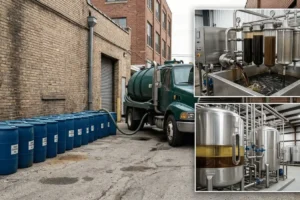
Most programs follow a simple chain: you store oil in a sealed container, a hauler collects it, then the recycler filters out food solids and water at recycling facilities. After that, the oil undergoes processes like transesterification to create biofuels, including biodiesel production, renewable diesel, and sustainable aviation fuel from waste cooking oil. It can also be reused in other industrial inputs. In some regions, processed oils may become animal feed ingredients, where regulations allow and quality standards are met. Proper recycling keeps fats out of sewers, which helps prevent sewer system backups, overflows into wastewater treatment plants, and emergency plumbing calls. It also reduces waste that would otherwise end up in landfills, cutting greenhouse gas emissions and preventing environmental pollution.
The difference between yellow grease and brown grease
Yellow grease is used fryer oil from equipment. Brown grease is waste from grease interceptors, often mixed with water and food. Recyclers handle them differently, because mixing them lowers oil value and can raise disposal fees.
Why stolen oil and illegal dumping are real risks
Unsecured bins attract grease theft because used oil has resale value. Illegal dumping can trigger fines and reputational harm, so locked containers and reputable haulers matter.
How to set up a simple, safe oil recycling routine for your staff
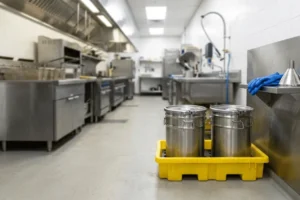
Consistency prevents messes and injuries while enhancing kitchen safety. First, let oil cool to a safe handling temperature. Next, filter it if your recycler prefers cleaner oil and your process allows it. Then transfer the waste cooking oil using a stable caddy or pump, not open buckets. Label the storage container and keep the lid closed. Store it in a designated spot away from doors and drains. Finally, document each pickup with a manifest report (date, volume estimate, and hauler name) and file the receipt. Automated oil management offers a modern solution to streamline these staff handling routines.
A one-page checklist near the disposal area turns “tribal knowledge” into a repeatable process, especially for new hires.
Storage and handling basics that prevent spills, burns, and pests
Use closed-lid storage containers and a spill tray (secondary containment). For large-scale storage needs, rendering tanks provide a reliable option. Keep the area wiped down, because residue attracts pests. Most importantly, never pour oil into sinks, floor drains, or toilets.
Pickup frequency, recordkeeping, and what inspectors may ask for
Match pickup cadence to fryer volume, because overfilled containers invite spills and theft. Keep manifests or receipts, vendor contact info, and service dates for health or environmental checks. Some partners offer fresh cooking oil delivery as part of an integrated service.
Choosing the right cooking oil recycling partner, and getting paid fairly
Select a grease collection service partner with licensed grease haulers, insurance, and clear service terms. Reliable scheduling matters, because missed pickups quickly become a safety issue in commercial kitchens. Ask for sealed storage containers, optional locks, and written rebate or pricing terms. Rebates depend on oil quality, contamination (water, solids, chemicals), volume, and market prices for recycled restaurant cooking oil. Also confirm who owns the storage containers and who is responsible if it leaks.
Red flags that can cost you money or create liability
Watch for vague contracts, no paperwork, cash-only offers without documentation, repeated missed pickups, or requests to mix fryer oil with grease trap waste.
Conclusion
Restaurant cooking oil recycling works best when it protects drains, keeps staff safe, and creates a clear paper trail. Train every hire, store waste cooking oil in sealed containers, and secure the pickup area to reduce theft. Then choose a licensed recycler who provides receipts and reliable service. Learn how to receive a rebate on your used cooking oil recycling. Call our grease collection service at (417) 329-2531